
How to Create, Register, and Purchase Gmail Accounts: A Complete Guide to Gmail Sign Up and Account Options
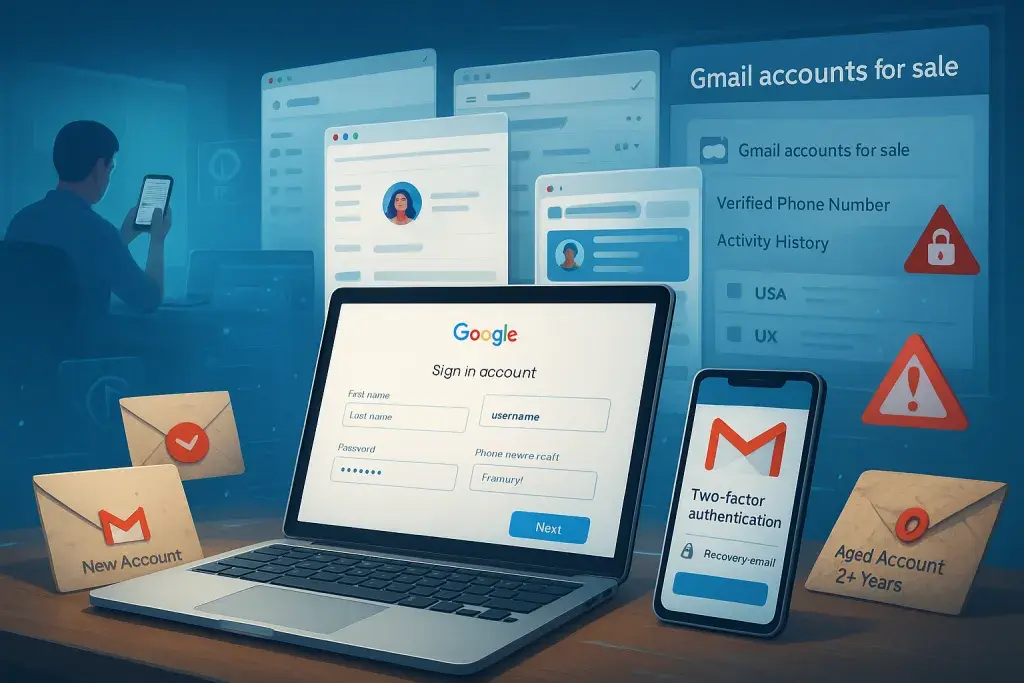
Authored by alwayspoka88.org, 28 Jan 2026
Who Reads This Guide and Why It Matters
Gmail accounts underpin a significant portion of the world's digital communication - from individual correspondence to business operations spanning multiple continents. Whether you need a single personal inbox or dozens of accounts for professional workflows, the process of obtaining a Gmail account involves more choices than most people expect. You can create one from scratch, register through Google's standard sign-up flow, or - in contexts where bulk availability matters - purchase Gmail accounts from third-party providers. Each path has its logic, its trade-offs, and its practical requirements.
This guide covers all three routes without bias. It explains what happens during Gmail account registration, what affects account quality and longevity, and when buying makes more sense than creating. If you've ever tried to manage multiple Gmail accounts manually and found the process exhausting, or if you need verified aged accounts for a project and aren't sure where to start, you'll find this guide genuinely useful rather than vague.
The goal here is clarity: not to push a single approach, but to give you enough structured information to make the right decision for your specific situation - and then execute it correctly.
Understanding Gmail Account Types and Their Uses
Before you create a Gmail account or consider purchasing one, it's worth understanding what differentiates account types and why that distinction matters in practice.
Personal vs. Workspace Accounts
A standard Gmail account lives at gmail.com and is intended for individual use. It comes with access to Google's suite of productivity tools, a generous storage allocation, and no mandatory organizational structure. A Google Workspace account, by contrast, uses a custom domain (like [email protected]) and is managed through a paid plan that gives administrators control over user access, storage limits, and security policies.
For most individual users and small-scale digital operations, a standard gmail.com account is sufficient. For businesses that need centralized administration, branded email, and team management features, Workspace is the correct choice. Understanding this distinction prevents you from signing up for the wrong type and having to migrate later.
New Accounts vs. Aged Accounts
A freshly created Gmail account comes with a clean history and no previous associations, which is ideal for personal use. However, in contexts where account trust matters - such as email outreach, platform registrations, or API-based services - aged accounts carry more credibility. An account that has existed for months or years, has sent and received emails regularly, and has been linked to other services is less likely to be flagged by automated systems than one created yesterday.
This is precisely why some users prefer to buy gmail account options from reputable marketplaces rather than create new ones. Aged accounts reduce warm-up time and often come with established activity histories, making them immediately functional for professional applications.
Single Accounts vs. Bulk Accounts
Most individuals need one or two Gmail addresses. Businesses, agencies, and technical operators often need dozens or hundreds. Creating accounts at scale manually is time-consuming and increasingly difficult due to phone verification requirements. This is where bulk purchasing becomes a practical solution, provided the accounts are sourced from a reliable provider and used within the terms applicable to the intended platform.
How to Create a Gmail Account: Step-by-Step
Creating a Gmail account is straightforward, but doing it correctly - with a setup that keeps the account stable long-term - requires more attention than most tutorials suggest.
The Basic Registration Process
Gmail account sign up begins at accounts.google.com. You'll be asked to provide a first and last name, choose a username (which becomes your email address), create a password, and supply a recovery option - either a phone number or a backup email. The username you choose is permanent once set, so it's worth spending a moment selecting something professional or personally meaningful rather than accepting a suggested alternative.
Phone verification is frequently required, particularly if the sign-up originates from an IP address that has been used to create multiple accounts recently. Using a residential connection rather than a VPN or shared network reduces the likelihood of being prompted for verification mid-process.
Profile and Security Setup
Once the Gmail account registration is complete, the next step most users skip - and shouldn't - is configuring recovery and security options. Add a recovery phone number and email even if you provided one during sign-up. Enable two-factor authentication (2FA) through the account's security settings. These steps protect the account from unauthorized access and also signal to the platform that the account is being managed by a real, attentive user.
Fill in the account's profile information, including a profile photo if it's a long-term address. Accounts that resemble real people behave more consistently across the services they're used with and are less likely to be subjected to additional verification prompts.
Completing Account Warm-Up
A newly created Gmail account functions differently than an established one. For the first few days, it's advisable to use it naturally: send a few emails, subscribe to a newsletter, check messages. This builds a baseline activity pattern that stabilizes the account's standing. Jumping immediately into high-volume sending or rapid-fire registrations on third-party platforms can trigger automated reviews and temporary restrictions.
Gmail Account Registration: Common Errors and How to Avoid Them
The Gmail account sign-up process looks simple on paper, but several common mistakes can result in immediate account suspension, failed verification, or locked access shortly after creation.
Phone Number Recycling Issues
When you use a phone number to verify a Gmail account, that number becomes linked to the account in the platform's records. If the number was previously used to verify other accounts - or if you're using a virtual number service that has been flagged - verification may fail or the account may be suspended shortly after creation. Using a fresh, unlinked mobile number is the most reliable approach for stable account creation.
IP Address Flags
Creating multiple accounts from the same IP address within a short timeframe is one of the most common reasons for registration failure or immediate account restriction. If you need to create Gmail account options in bulk, spacing out the process over days and using different network connections significantly reduces friction. This is one of the practical reasons why many operators prefer to purchase Gmail accounts rather than create them manually at scale.
Username Conflicts and Alternatives
Popular usernames are taken. The platform will suggest alternatives, many of which include numbers appended to your name. If the suggested alternatives don't serve your needs, experiment with different name orderings, professional identifiers, or abbreviated formats. Avoid using words that could be flagged as spam-related, and steer clear of impersonating real people or brands - such accounts are subject to recovery requests from third parties.
How to Purchase Gmail Accounts: What You Need to Know
Buying Gmail accounts is a legitimate option for many professional use cases, but the market for Gmail accounts for sale varies significantly in quality. Understanding what to look for separates reliable purchases from wasted money.
Why People Purchase Gmail Accounts
The primary motivation is efficiency. Creating a Gmail account manually requires time, a phone number, a stable IP, and a warm-up period before the account is fully functional. For teams that need ten, fifty, or several hundred accounts, this process is impractical. Purchased accounts - particularly aged ones with existing activity - bypass the warm-up stage entirely and are ready for use in outreach, automation, or platform registration immediately upon delivery.
There is also the matter of reliability. Freshly created accounts are statistically more likely to be flagged during aggressive use than accounts with months or years of legitimate history. When sourcing from a trustworthy marketplace, users can find a buy gmail account option that matches their specific needs - including aged accounts with phone verification, accounts with activity history, or accounts verified with specific country phone numbers.
What Makes a Gmail Account "Good" When Purchased
Not all Gmail accounts for sale are equal. The factors that determine account quality include: the age of the account, whether it was verified with a real phone number, whether it has prior activity (sent emails, received messages, linked services), and the method used to create it. Accounts created through automated tools on flagged IPs and then mass-listed for sale are high-risk. Accounts created manually with real devices and real numbers, then kept active before being sold, are significantly more stable.
Ask any supplier about these specifics. A legitimate provider will answer clearly. Vague descriptions of "high-quality verified accounts" with no specifics are a warning sign.
Evaluating Suppliers for Gmail Accounts for Sale
Supplier reputation is the most reliable indicator of account quality. Look for providers with transparent listing details, user reviews, clear return or replacement policies, and visible contact options. Avoid purchasing accounts offered through informal channels - social media posts, unmoderated forums, or anonymous storefronts - without verifiable history.
Before purchasing in bulk, buy a small test batch first. Log into each account, verify that the credentials work, check account age through the account's activity history, and confirm that the accounts don't trigger immediate verification prompts when accessed. If the test batch performs well, scaling the purchase is a reasonable next step.
Legal and Ethical Considerations
Purchasing Gmail accounts for personal or professional use exists in a gray area that depends heavily on intended use. Using purchased accounts for spam, phishing, or platform manipulation violates terms of service and, in many jurisdictions, laws related to fraud and electronic communications. Using them for legitimate business operations - outreach, research, team management - carries far lower risk and is the dominant use case among professional buyers. Know your intended use and evaluate whether purchased accounts genuinely serve it or whether the standard creation process would suffice.
Managing Multiple Gmail Accounts Effectively
Whether you've created accounts manually or purchased them, managing more than one Gmail account requires organization from the start. Disorganized multi-account setups lead to missed messages, account lockouts, and security vulnerabilities.
Browser Profiles and Session Management
Chrome-based browsers support multiple user profiles, each with its own cookies, saved passwords, and logged-in sessions. Assigning each Gmail account to its own browser profile keeps sessions isolated and prevents cross-contamination of account data. This is especially important when operating accounts at scale, where logging in and out of a single browser repeatedly creates both friction and detection risk.
Dedicated multi-account browser tools take this further, allowing users to run dozens of isolated sessions simultaneously. These are worth the investment for anyone managing more than five accounts regularly.
Password and Credentials Management
Each Gmail account should have a unique, strong password. Using a password manager eliminates the risk of reusing credentials and makes managing dozens of accounts practical rather than chaotic. Store recovery codes for 2FA-enabled accounts in the same system, clearly labeled. Losing access to a purchased or carefully created account because credentials weren't stored properly is an avoidable and frustrating outcome.
Monitoring Account Health
Gmail accounts can fall into restricted states without obvious warning. Checking account activity logs periodically - available in the account's security settings - reveals any unauthorized access attempts or unusual login locations. Accounts that haven't been accessed in extended periods may require re-verification when you return to them. Building a simple monitoring routine prevents small issues from becoming permanent account losses.
Frequently Asked Questions
Can I create multiple Gmail accounts using the same phone number?
The platform allows a limited number of accounts to be associated with a single phone number - typically no more than four. Attempting to create more may result in the number being rejected during verification. For bulk account creation, separate phone numbers are required for each account or small group of accounts.
What happens to a Gmail account that is inactive for a long time?
Accounts that remain inactive for an extended period - typically two years or more - are subject to deletion under the platform's inactivity policy. The account's username may eventually become available again, though not immediately. Logging in periodically and sending at least one email preserves account status.
Is there a difference between a Gmail account verified with a real phone number versus a virtual number?
Yes, and the difference is practically significant. Accounts verified with real mobile numbers are more stable and less likely to trigger verification prompts when accessed from new devices or locations. Virtual number services that have been widely used for account creation are often flagged, meaning accounts verified through them may be restricted or suspended shortly after creation.
What should I do if a purchased Gmail account gets suspended?
First, check whether the suspension notice includes an appeal option - some restrictions are reversible. If the account came with a replacement guarantee from the supplier, contact them with evidence of the suspension. For future purchases, treat suspension rates as a quality signal: reliable suppliers will offer replacements or refunds, and their accounts will have lower suspension rates overall.
Can purchased Gmail accounts be used with third-party apps and services?
Yes, in most cases. Purchased accounts function like any other Gmail account and can be connected to third-party apps via OAuth or IMAP/SMTP. The important caveat is that some platforms cross-reference account age and activity history. Freshly created or low-activity accounts may face additional verification when linking to external services, which is why aged purchased accounts with prior history are preferable for professional integrations.
How long does the Gmail account sign-up process take?
The core registration - filling out the form and passing verification - takes under ten minutes under normal conditions. However, a fully stable, trusted account requires a warm-up period of at least several days to two weeks of normal usage before being used for high-volume or sensitive applications. Rushing this period increases the likelihood of automated restrictions.